News | Osaka University Identifies Key Protein Controlling Sperm Flagellar Movement and a New Mechanism of Male Infertility
Infertility has many possible causes, and couples trying to conceive may struggle to understand where the problem lies. Osaka University researchers recently reported in Nature Communications that several key proteins play central roles in sperm development and male fertility, offering a new view of the mechanisms behind male infertility.
Sperm move using flagella, and normal flagellar function is essential for conception. Any factor that impairs this movement may cause male infertility. The flagellum has a highly complex internal structure, with radial spokes regulating its beating. Earlier evidence linked the radial spoke protein CFAP91 to male infertility, but its mechanism remained unclear.
To investigate CFAP91 in sperm development and movement, Haoting Wang and colleagues created mice lacking the protein and analyzed sperm shape and motility. Without CFAP91, flagellar formation was disrupted and the mice were clearly infertile. After re-expressing CFAP91, the researchers found that it interacted with known radial spoke proteins. Proximity labeling identified additional related proteins, with EFCAB5 emerging as a key finding.
“The results were very clear,” said corresponding author Haruhiko Miyata. “Loss of CFAP91 not only disrupted sperm flagellum assembly, but directly caused male infertility.” The team also found that EFCAB5, located near CFAP91, is essential for regulating sperm movement. Wang added: “Our study shows that CFAP91 is a scaffold protein for radial spoke assembly, while EFCAB5 is crucial for specialized sperm motility.”
The researchers said the complexity and precise regulation of flagellar structure highlight the importance of sperm morphology and function in male fertility. A deeper understanding of these proteins may clarify the causes of male infertility and identify new diagnostic and treatment targets.
Source:
Collected online
Author LinkedIVF TeamPublished 2025-09-13
This article used AI assistance; LinkedIVF has not recorded an editorial review for this item. It is not medical advice.
This content is for informational purposes only and does not constitute medical advice. Please consult a licensed physician. Content guidelines & editorial policy


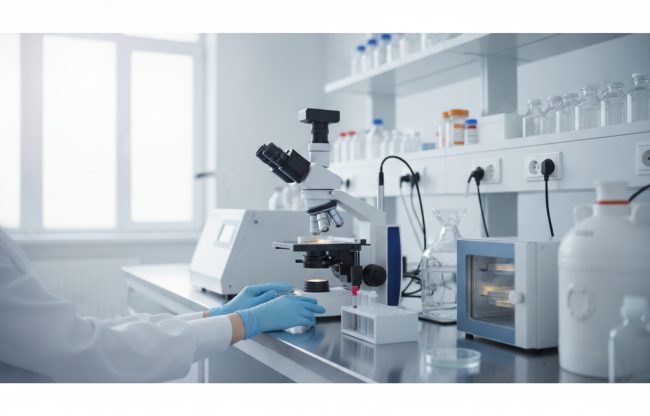





News | Osaka University Identifies Key Protein Controlling Sperm Flagellar Movement and a New Mechanism of Male Infertility
News | Osaka University Identifies Key Protein Controlling Sperm Flagellar Movement and a New Mechanism of Male Infertility
Infertility has many possible causes, and couples trying to conceive may struggle to understand where the problem lies. Osaka University researchers recently reported in Nature Communications that several key proteins play central roles in sperm development and male fertility, offering a new view of the mechanisms behind male infertility.
Sperm move using flagella, and normal flagellar function is essential for conception. Any factor that impairs this movement may cause male infertility. The flagellum has a highly complex internal structure, with radial spokes regulating its beating. Earlier evidence linked the radial spoke protein CFAP91 to male infertility, but its mechanism remained unclear.
To investigate CFAP91 in sperm development and movement, Haoting Wang and colleagues created mice lacking the protein and analyzed sperm shape and motility. Without CFAP91, flagellar formation was disrupted and the mice were clearly infertile. After re-expressing CFAP91, the researchers found that it interacted with known radial spoke proteins. Proximity labeling identified additional related proteins, with EFCAB5 emerging as a key finding.
“The results were very clear,” said corresponding author Haruhiko Miyata. “Loss of CFAP91 not only disrupted sperm flagellum assembly, but directly caused male infertility.” The team also found that EFCAB5, located near CFAP91, is essential for regulating sperm movement. Wang added: “Our study shows that CFAP91 is a scaffold protein for radial spoke assembly, while EFCAB5 is crucial for specialized sperm motility.”
The researchers said the complexity and precise regulation of flagellar structure highlight the importance of sperm morphology and function in male fertility. A deeper understanding of these proteins may clarify the causes of male infertility and identify new diagnostic and treatment targets.
Source:
Collected online