News | Turning Skin-Cell DNA into Eggs: A New Frontier in Human Reproduction
For the first time in humans, researchers have reprogrammed DNA from an adult woman’s skin cell into a human oocyte and achieved fertilization and early embryo development in vitro. The breakthrough offers a theoretical path for same-sex couples or women with infertility to have a child genetically related to both parents, but remains far from clinical use.
Shoukhrat Mitalipov’s team at Oregon Health & Science University conducted the study. Cloning can create animals by placing a somatic-cell nucleus into an egg, but this produces a genetic copy rather than offspring combining two genomes. Families wanting inheritance from both parents still require a sperm-plus-egg model.
Eggs and sperm are haploid, carrying one chromosome set, while skin and other somatic cells carry two. Turning a somatic cell into a fertilizable egg requires precisely reducing 46 chromosomes to 23 while recombining and selecting genes as in natural development.
The team attempted to reproduce this process in the laboratory. They removed nuclei from hundreds of donated eggs at a key chromosome-division stage and inserted nuclei from a healthy woman’s skin fibroblasts. Microscopy showed the chromosomes aligning on the spindle like those in natural eggs.
Researchers then injected some modified eggs with sperm from healthy donors, similar to certain mitochondrial replacement techniques used to avoid genetic disease.
In natural fertilization, sperm triggers calcium signaling that prompts final chromosome selection and expulsion of excess DNA. Initially, the skin-cell chromosomes aligned but did not separate. The team used electrical pulses to mimic sperm contact, rapidly admit calcium, and combined this with medication to release the egg from its arrested state.
After repeated experiments, some eggs successfully halved their chromosomes. About 9% of fertilized embryos reached the blastocyst stage 5–6 days after fertilization, when IVF embryos are typically transferred. No embryos were transferred or cultured beyond 6 days.
Surviving chromosome combinations carried substantial defect risks. Mitinori Saitou of Kyoto University said the method is far from ready for clinical use. Katsuhiko Hayashi of Osaka University called it technically complex and rigorous but inefficient and high-risk, while also describing it as a major breakthrough in halving the human genome that may enable new reproductive technologies.
Mitalipov agreed that chromosome abnormalities remain a major problem. “We can say we are halfway there, but still far from the finish line.”
The research also raises ethical, legal, and social questions about genetic kinship, family structures, and reproductive boundaries.
Story source:
Collected online
Author LinkedIVF TeamPublished 2026-02-03
This article used AI assistance; LinkedIVF has not recorded an editorial review for this item. It is not medical advice.
This content is for informational purposes only and does not constitute medical advice. Please consult a licensed physician. Content guidelines & editorial policy




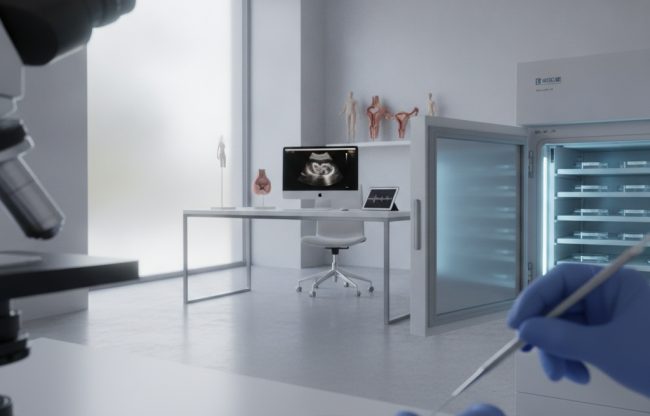



News | Turning Skin-Cell DNA into Eggs: A New Frontier in Human Reproduction
News | Turning Skin-Cell DNA into Eggs: A New Frontier in Human Reproduction
For the first time in humans, researchers have reprogrammed DNA from an adult woman’s skin cell into a human oocyte and achieved fertilization and early embryo development in vitro. The breakthrough offers a theoretical path for same-sex couples or women with infertility to have a child genetically related to both parents, but remains far from clinical use.
Shoukhrat Mitalipov’s team at Oregon Health & Science University conducted the study. Cloning can create animals by placing a somatic-cell nucleus into an egg, but this produces a genetic copy rather than offspring combining two genomes. Families wanting inheritance from both parents still require a sperm-plus-egg model.
Eggs and sperm are haploid, carrying one chromosome set, while skin and other somatic cells carry two. Turning a somatic cell into a fertilizable egg requires precisely reducing 46 chromosomes to 23 while recombining and selecting genes as in natural development.
The team attempted to reproduce this process in the laboratory. They removed nuclei from hundreds of donated eggs at a key chromosome-division stage and inserted nuclei from a healthy woman’s skin fibroblasts. Microscopy showed the chromosomes aligning on the spindle like those in natural eggs.
Researchers then injected some modified eggs with sperm from healthy donors, similar to certain mitochondrial replacement techniques used to avoid genetic disease.
In natural fertilization, sperm triggers calcium signaling that prompts final chromosome selection and expulsion of excess DNA. Initially, the skin-cell chromosomes aligned but did not separate. The team used electrical pulses to mimic sperm contact, rapidly admit calcium, and combined this with medication to release the egg from its arrested state.
After repeated experiments, some eggs successfully halved their chromosomes. About 9% of fertilized embryos reached the blastocyst stage 5–6 days after fertilization, when IVF embryos are typically transferred. No embryos were transferred or cultured beyond 6 days.
Surviving chromosome combinations carried substantial defect risks. Mitinori Saitou of Kyoto University said the method is far from ready for clinical use. Katsuhiko Hayashi of Osaka University called it technically complex and rigorous but inefficient and high-risk, while also describing it as a major breakthrough in halving the human genome that may enable new reproductive technologies.
Mitalipov agreed that chromosome abnormalities remain a major problem. “We can say we are halfway there, but still far from the finish line.”
The research also raises ethical, legal, and social questions about genetic kinship, family structures, and reproductive boundaries.
Story source:
Collected online