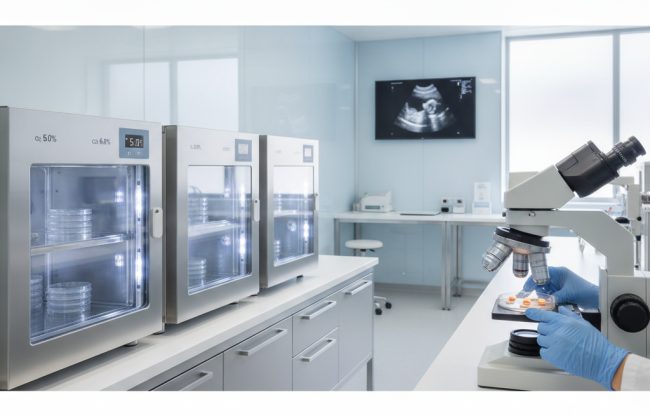
Nova IVF Fertility, a well-known reproductive medical group in India, recently announced the launch of a new state-of-the-art embryology laboratory in Pune, aimed at enhancing the quality of in vitro fertilization (IVF) care. The laboratory is equipped with cutting-edge technology such as time-lapse incubation monitoring, which continuously records the complete development process of embryos from fertilization to blastocyst without repeatedly removing the culture dishes, significantly reducing environmental disturbance. This allows embryologists to assess embryo quality under non-invasive conditions, thereby selecting embryos with the highest implantation potential and improving the success rate of IVF treatment cycles.
The new laboratory also employs strict air purification and temperature control systems to ensure the stability of the embryo culture environment. Nova IVF stated that this move not only strengthens the group's reproductive medical service network in Maharashtra but also allows local patients to access high-quality IVF care nearby, reducing the burden of traveling between cities for medical treatment. For Chinese-speaking patients considering IVF, this facility upgrade means more precise embryo selection and a higher chance of pregnancy, particularly suitable for cases involving advanced maternal age or repeated implantation failure.
Time-lapse monitoring technology is a significant advancement in reproductive medicine in recent years. Traditional embryo assessment requires periodically removing embryos for observation, which may cause fluctuations in the culture environment; in contrast, time-lapse monitoring systems provide continuous, stable observation, recording the timing of embryo cleavage and morphological changes, allowing embryologists to gain a more comprehensive understanding of embryo developmental dynamics. This technology is particularly helpful in identifying embryos with higher developmental potential, reducing errors from subjective judgment, thereby increasing the success rate of single embryo transfer and lowering the risk of multiple pregnancies.
Nova IVF Fertility is one of India's leading reproductive medical groups, with centers in multiple locations. The launch of the Pune laboratory is an important step in the group's expansion of its service footprint. For patients in Chinese-speaking regions considering undergoing IVF treatment in India, this new facility offers a more advanced technological option. However, experts remind that when choosing a reproductive center, in addition to equipment and technology, one should also comprehensively consider physician experience, laboratory quality, and individual physical conditions, and communicate fully with the medical team to develop a personalized treatment plan.
Source: BW Healthcare World. This article is a translated report for general informational reference.
Published 2026-08-09
This article was prepared with AI assistance and reviewed by our editorial team before publication.
This content is for informational purposes only and does not constitute medical advice. Please consult a licensed physician. Content guidelines & editorial policy






News | Nova IVF launches advanced embryology laboratory in Pune, strengthening IVF care
Nova IVF Fertility, a well-known reproductive medical group in India, recently announced the launch of a new state-of-the-art embryology laboratory in Pune, aimed at enhancing the quality of in vitro fertilization (IVF) care. The laboratory is equipped with cutting-edge technology such as time-lapse incubation monitoring, which continuously records the complete development process of embryos from fertilization to blastocyst without repeatedly removing the culture dishes, significantly reducing environmental disturbance. This allows embryologists to assess embryo quality under non-invasive conditions, thereby selecting embryos with the highest implantation potential and improving the success rate of IVF treatment cycles.
The new laboratory also employs strict air purification and temperature control systems to ensure the stability of the embryo culture environment. Nova IVF stated that this move not only strengthens the group's reproductive medical service network in Maharashtra but also allows local patients to access high-quality IVF care nearby, reducing the burden of traveling between cities for medical treatment. For Chinese-speaking patients considering IVF, this facility upgrade means more precise embryo selection and a higher chance of pregnancy, particularly suitable for cases involving advanced maternal age or repeated implantation failure.
Time-lapse monitoring technology is a significant advancement in reproductive medicine in recent years. Traditional embryo assessment requires periodically removing embryos for observation, which may cause fluctuations in the culture environment; in contrast, time-lapse monitoring systems provide continuous, stable observation, recording the timing of embryo cleavage and morphological changes, allowing embryologists to gain a more comprehensive understanding of embryo developmental dynamics. This technology is particularly helpful in identifying embryos with higher developmental potential, reducing errors from subjective judgment, thereby increasing the success rate of single embryo transfer and lowering the risk of multiple pregnancies.
Nova IVF Fertility is one of India's leading reproductive medical groups, with centers in multiple locations. The launch of the Pune laboratory is an important step in the group's expansion of its service footprint. For patients in Chinese-speaking regions considering undergoing IVF treatment in India, this new facility offers a more advanced technological option. However, experts remind that when choosing a reproductive center, in addition to equipment and technology, one should also comprehensively consider physician experience, laboratory quality, and individual physical conditions, and communicate fully with the medical team to develop a personalized treatment plan.
Source: BW Healthcare World. This article is a translated report for general informational reference.